Most organizational processes were never designed with AI in mind. They are the product of incremental changes over years, sometimes decades. Manual checks layered on manual checks, data moving between siloed systems, and exception handling scattered across teams. Technology plays a supporting role at best, and humans are still positioned as the primary executors of each step. The result is an accumulation of complexity: processes that are fragmented, slow to execute, costly to adapt, and difficult to scale.
In the age of AI, this legacy architecture is a liability. To unlock the technology‘s full potential, we must rethink processes from the ground up so that AI becomes the primary orchestrator, not an afterthought. Organizations need to shift from optimizing existing processes with AI to redesigning processes that inherently integrate AI, making them ready for execution by autonomous AI agents.
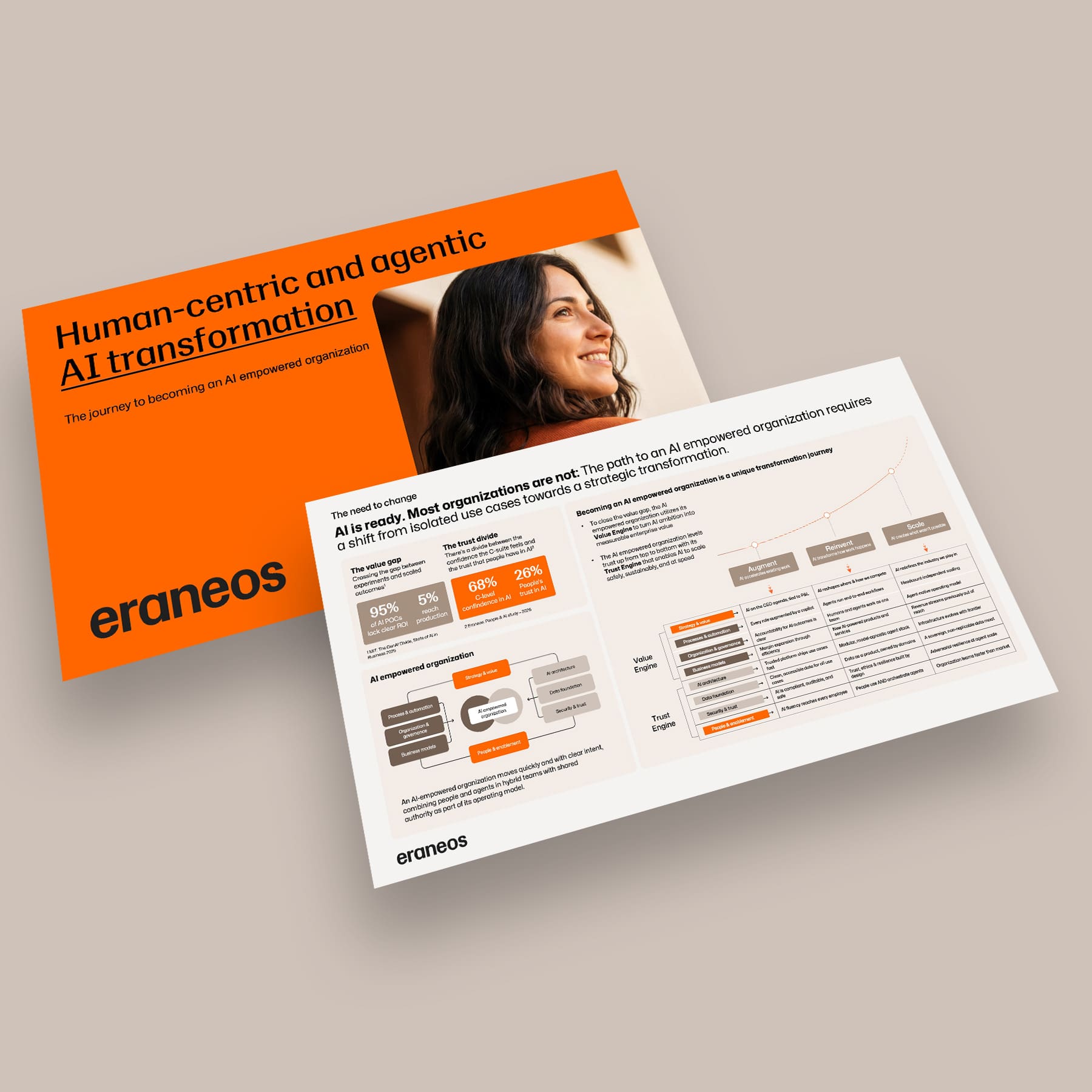
In this whitepaper, we offer a comprehensive approach to process design that prepares organizations for both immediate AI implementation and future agentic AI capabilities.






Whitepaper
AI safety in production – from model capability to enterprise control