The life sciences industry has built global production networks that support the efficient delivery of lifesaving products at scale. As trade conditions shift, cyber threats evolve, and technologies such as artificial intelligence (AI) create new dependencies, the next task is to make those networks more adaptable without losing their strengths.
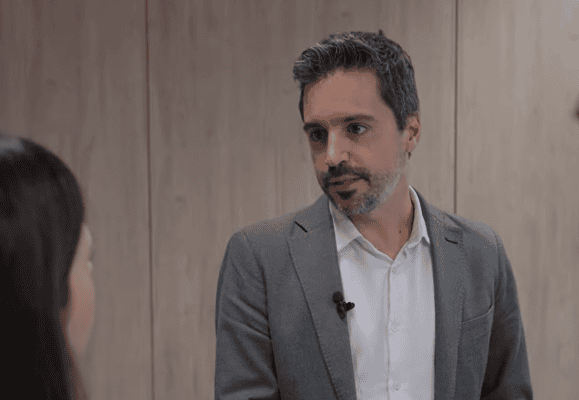
Eraneos Partner Matthias Wittig leads our life sciences practice in Switzerland and our R&D practice across Europe. He says the industry’s special duty to protect patients makes resilience a strategic imperative, not only an operational compliance topic.
We need to look beyond the idea of the world as a single open market for life-saving medicines and technologies. De-globalization has to be part of the resilience conversation, whether you’re talking about APIs, supply chains, artificial intelligence, or new forms of cyber attack.

De-globalization may require new production models
Global life sciences organizations rely on active pharmaceutical ingredients (APIs) and manufacturing in China and India. At the same time, US trade policy, tensions around Taiwan, and Europe’s evolving sovereignty agenda make long-term access harder to take for granted. Leaders need a clear view of how they would maintain supply if cross-border flows slow or change.
“Cost and quality will always be essential. But we also need to plan for changes in access to a major market such as China, and consider what tensions around Taiwan could mean for cross-border transactions. Patients should be able to count on receiving the treatments they need,” Matthias says.
Finding an alternative API supplier is only the first step. Because switching takes time and regulatory approval, quality, regulatory, supply-chain, and production teams should qualify alternatives early and align them with inventory plans.
For European companies, securing API supplies may involve exploring novel strategies, such as new partnerships or even industry consortiums for key ingredients, says Matthias. In such a scenario, multiple firms could support regional production of complex APIs that do not differentiate the finished medicine. Each would preserve competition while reducing shared exposure to one external source.
“The raw material is not always the competitive factor. A consortium can build capacity that no single company needs to own alone,” Matthias says. Regional production will often cost more, and European permitting can be slow. But a complete cost model also needs to account for supply continuity.
How prepared are you for a disruption?
Most organizations know their risks. Far fewer know how prepared they are.

Cyber plans should account for state-backed attacks
Matthias sees cyber threats as the most pressing resilience topic facing the industry now. State-backed attackers bring a different level of capability and could target production and R&D on a scale that standard incident plans may not fully address. A research breach can expose years of work and significant investment, making it important to test plans against more coordinated attacks.
“The war in Ukraine shows how cyber attacks, automation, and AI are reshaping conflict. Companies need to test whether their plans still hold when a government, not an individual hacker, coordinates the attack,” Matthias says.
Boards should test scenarios involving plant control systems, research assets, and critical suppliers. Cyber and military experts can bring a wider perspective, helping leaders identify blind spots, agree priorities, and assign decision rights before a serious incident.
AI sovereignty is the next AI security question
Life sciences organizations are moving quickly on AI because the research benefits are hard to ignore. The next step is treating model access as a resilience dependency alongside security, safety, and data control.
AI security is already a major priority, but it’s also time to talk about AI sovereignty as a resilience topic. Many firms rely on AI tools from just one provider or country. What would a practical fallback look like if access changed, and could an alternative model support critical work?
Leaders should identify which processes depend on one AI provider and which teams could work without it. A multi-provider setup may be too costly or complex. A fallback test can show whether teams can switch, how an alternative performs, and which critical processes need a backup.
Life-saving industries face a higher resilience standard
At the regulatory level, the EU already recognizes the need for resilient supply chains in critical sectors such as life sciences. Future requirements are likely to place greater emphasis on continuity. Companies can use that direction to connect resilience planning more closely to the industry’s central mission: protecting patients’ health.
The resilience agenda is becoming broader, and Matthias believes organizations will benefit from exploring unconventional approaches and challenging existing strategies. There are practical opportunities to start now. By qualifying alternatives, testing cyber responses, and reducing critical AI dependencies, companies can prepare for changing expectations while strengthening day-to-day decision-making. More importantly, they can keep their promises to the patients who rely on their products.