Most strategies don’t fail in the boardroom. They fail in the months after approval.
Leadership teams define ambitious strategies, agree on priorities and launch initiatives. Yet as execution begins, the original direction often loses its influence. Resources continue to follow established structures, business units pursue competing objectives and management reviews track progress without necessarily driving better decisions.
The challenge is rarely a lack of strategic ambition. It is the absence of a system that consistently connects strategy with what the organization funds, executes and measures.
Closing the gap between strategy and execution
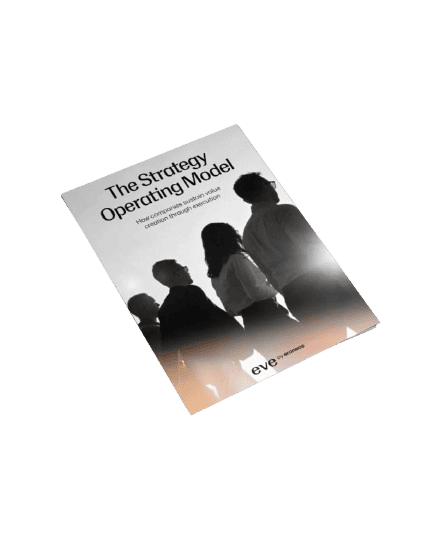
In The Strategy Operating Model, Eve by Eraneos explores why even well-defined strategies struggle to deliver their intended business outcomes and what leadership teams can do differently.
The whitepaper introduces an integrated approach that connects four essential management activities: strategy development, strategic planning, prioritization and performance steering.
Rather than treating these as separate processes, the Strategy Operating Model brings them together in a continuous cycle. Strategic priorities inform investment decisions, performance evidence guides resource allocation and management can adapt before opportunities lose their value.
Three principles for sustained value creation
A strong strategy needs more than disciplined implementation. It requires a management system that keeps strategic intent relevant as conditions change.
The whitepaper introduces three principles that make this possible:
- Stringency: Maintain a clear connection from strategic ambition to operational action.
- Integration: Align strategic choices with financial planning and resource allocation.
- Rhythm: Establish a management cadence that enables timely decisions and continuous adaptation.
Two real-world case studies illustrate what this approach can achieve. A European utility accelerated decisions from six months to a few weeks, while a German retail bank reduced its cost-income ratio by approximately 30%.
Strategy creates value when it shapes decisions, resources and action long after the planning process ends.
Discover how to turn strategic intent into sustained business performance.